White and Brown Are the Same Bones Treated Differently
Two stocks, one skeleton: the colour of the stock itself is determined by what happens to the bones before the water goes in, not after, though a finished sauce can gain its colour later, in the pot.
An argument for keeping both stocks: why a white stock is specified in a nine-hour braise even though brown stock would seem more obvious, and what colour the finished sauce becomess either way.
Photo: Marek Piwnicki / PexelsThe Heat Decides
A white stock (fond blanc) is made from bones that have been blanched — cold water in, brought to a boil, drained, rinsed — and then simmered without ever developing colour. A brown stock (fond brun) starts with the same bones roasted at 220 °C until the Maillard reaction builds a crust, then deglazed before the long simmer begins. The bones themselves are chemically identical before either process starts; the difference is entirely a function of applied heat and its timing.
Both methods convert collagen to gelatin. The structural proteins in cartilage and knuckle bones dissolve at sustained temperatures above roughly 70 °C, which is why either stock sets to a tremble when chilled. The roasting step adds melanoidins and caramelised sugars — depth, bitterness, colour — but it does not produce a more gelatinous result. A properly made white veal stock, built from blanched knuckles and feet, sets harder than a brown one made from the same bones with less cartilage in the roasting pan.
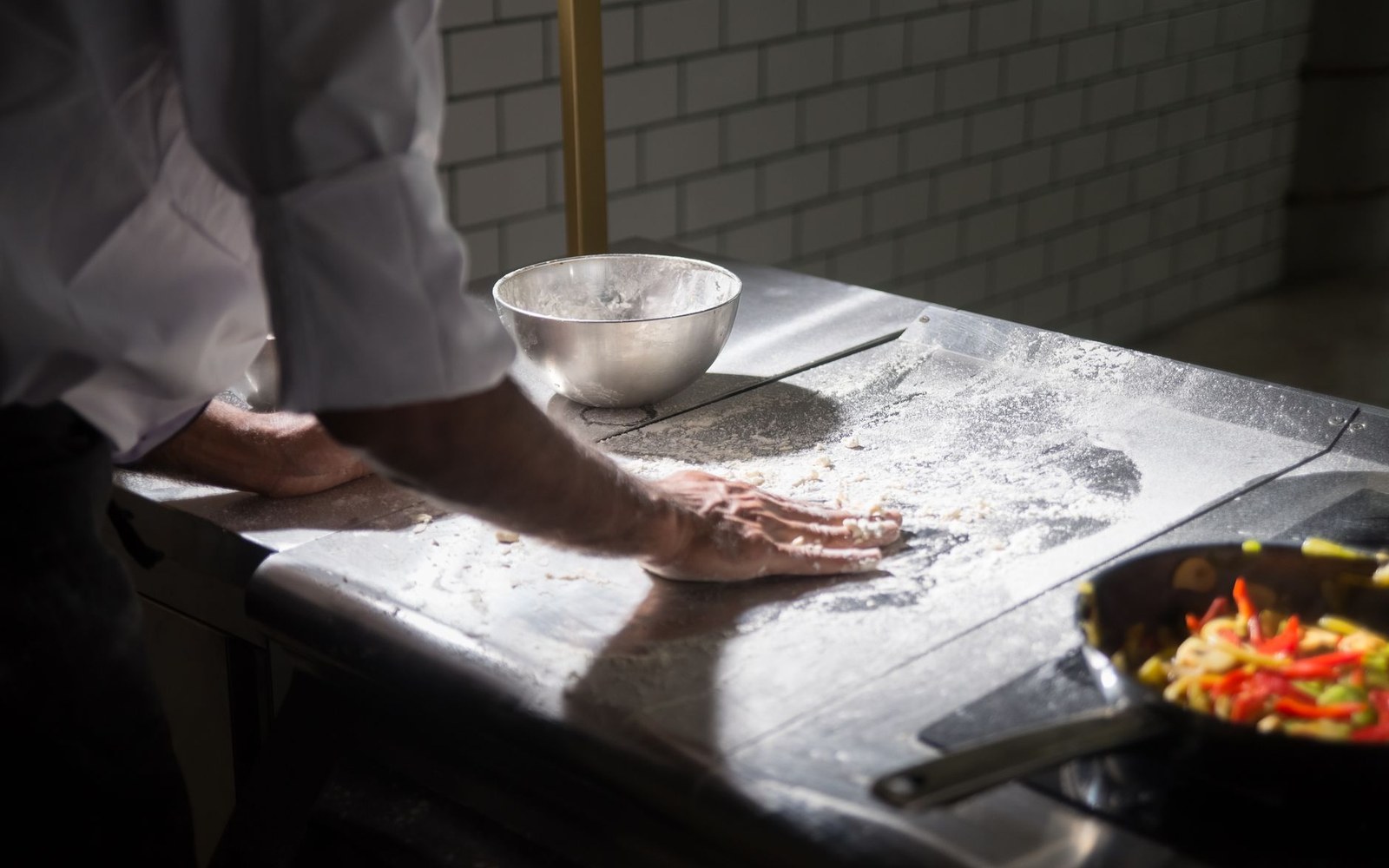
Steel, a scraper and a bench: the equipment list for most of what follows is short, and the variable that matters is a temperature held over hours.
Photo: Kampus Production / Pexels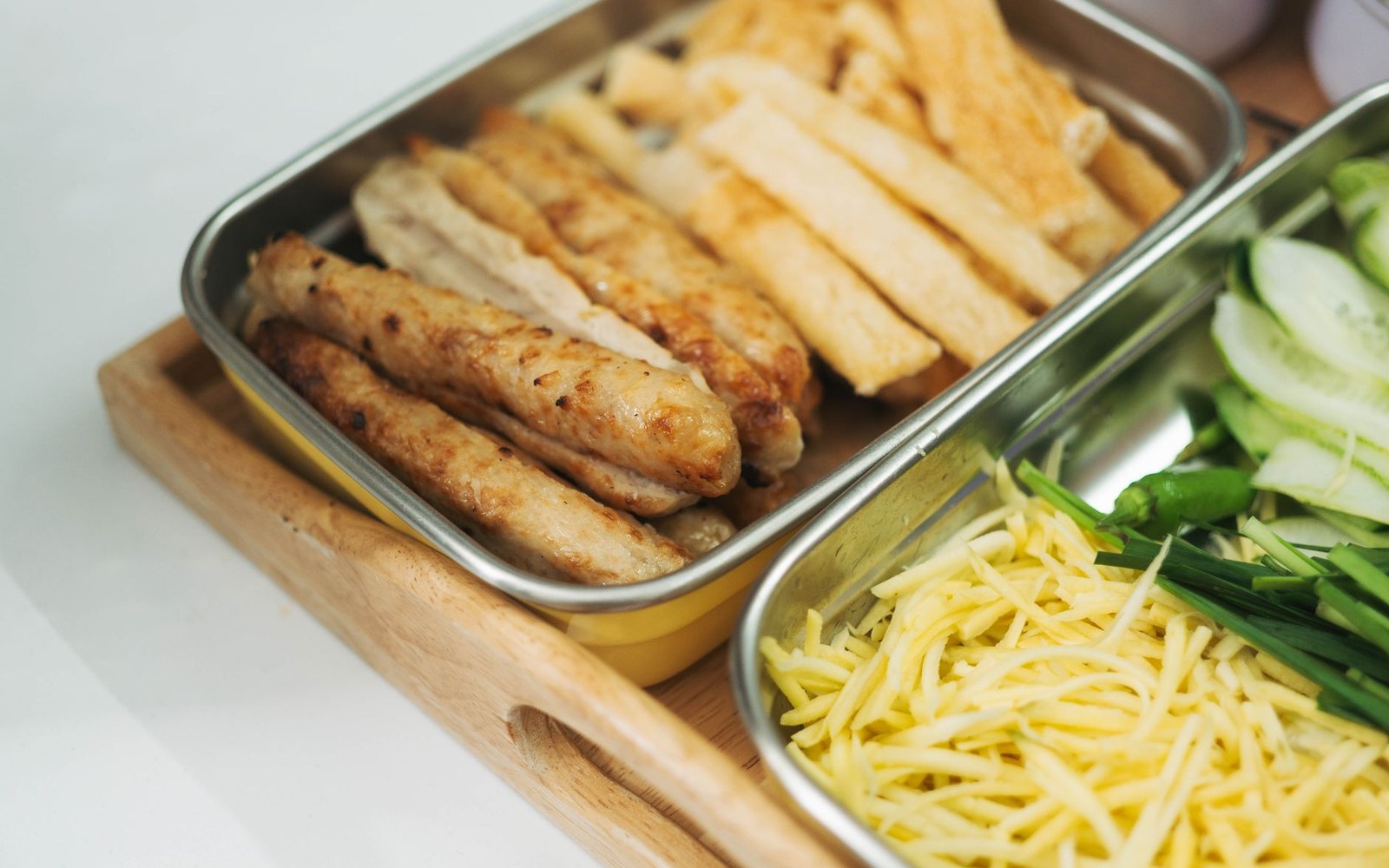
Nothing on a pass is weighed during service. Quantities are settled hours earlier, in containers, which is why a written ratio matters more than a written recipe.
Photo: FOX ^.ᆽ.^= ∫ / PexelsWhy the Braise Specifies White
A nine-hour braise at low temperature already does its own browning work. The shoulder of lamb is properly seared before it goes into the pot; the fond that lifts from that sear — deglazed with wine — already carries colour and roasted character. Add a brown stock beneath it and the final sauce becomes heavy, one-dimensional, all middle-ground bitterness with no lift. White stock used as the braising liquid keeps the background clean, letting the meat's own Maillard products and the reduction do the seasoning work as the liquid concentrates over those nine hours.
That reduction is where colour arrives regardless. A white stock reduced by two-thirds darkens to amber. Reduced further — to a glace — it turns near-black, viscous, intensely savoury, carrying Maillard products formed during reduction rather than from any oven. The sauce finds its colour in the pot, not in the roasting pan.
Keep both stocks in the freezer in labelled quarts. Use the brown for short braises and pan sauces where roasted depth is the whole point. Use the white underneath long cooks where the meat is already doing that work.
Materials and method
- 01Blanching (white stock) — cold water, bring to boil, drain, rinse; removes impurities and blood without adding colour
- 02Roasting temperature (brown stock) — 220 °C; drives Maillard reaction on bone surfaces and marrow
- 03Collagen conversion — begins above ~70 °C sustained; produces gelatin that sets the stock when cold
- 04Reduction stages — two-thirds reduction darkens a white stock to amber; further reduction to glace produces near-black, viscous concentrate
- 05Melanoidins — brown pigment compounds produced by Maillard reaction; present in brown stock from roasting, in any stock from heavy reduction