A Shoulder of Lamb, Nine Hours, 120 °C
Low and slow is not about tenderness. It is about collagen, and collagen has a schedule.
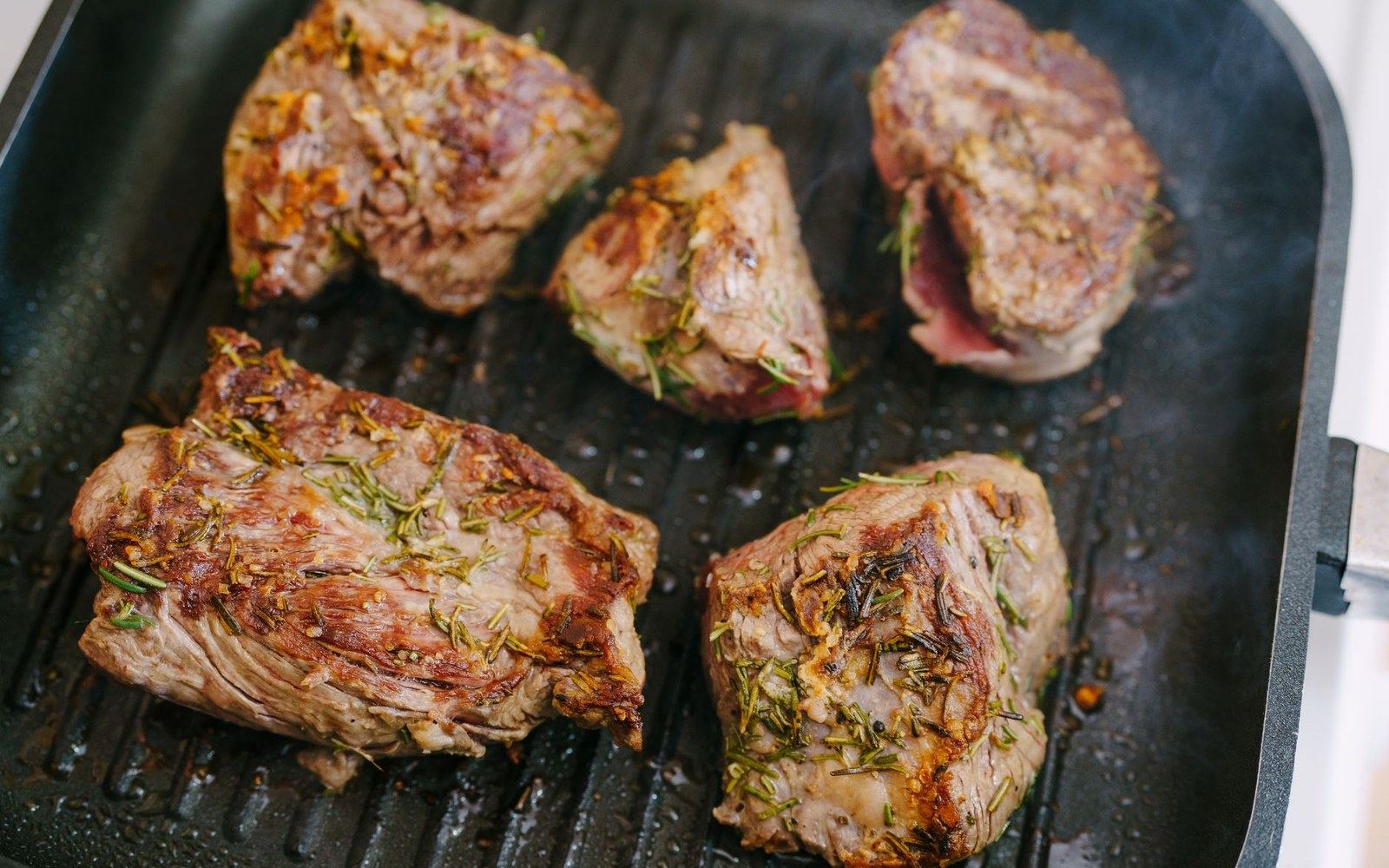
A complete braising method for lamb shoulder: salt at 1.5% the day before, brown properly, seal with two-thirds stock, 120 °C for nine hours.
Photo: Nadtochiy Photography / PexelsThe Salt, the Brown, and the Reasoning
A lamb shoulder weighing around 2.2 kg carries roughly 30 per cent of its mass in connective tissue and intermuscular fat. The muscles that move a front leg against resistance all day — trapezius, supraspinatus, the deep layers of the triceps — are dense with collagen-wrapped fibres. That collagen is the reason the shoulder exists as a braising cut rather than a roasting one, and it is the reason the temperature matters more than most cooks articulate.
Salt the shoulder at 1.5 per cent of its total weight the day before — for a 2.2 kg piece, that is 33 g of fine sea salt, rubbed into every surface and into any natural seam you can open with a finger. Refrigerate it uncovered overnight. The salt draws moisture to the surface, dissolves, and migrates back in as a dilute brine. By the time the shoulder hits the pan, the seasoning is in the meat, not just on it. This is not a technique borrowed from fine dining; it is what any competent cook in a serious kitchen does to any large piece of protein before it sees heat.
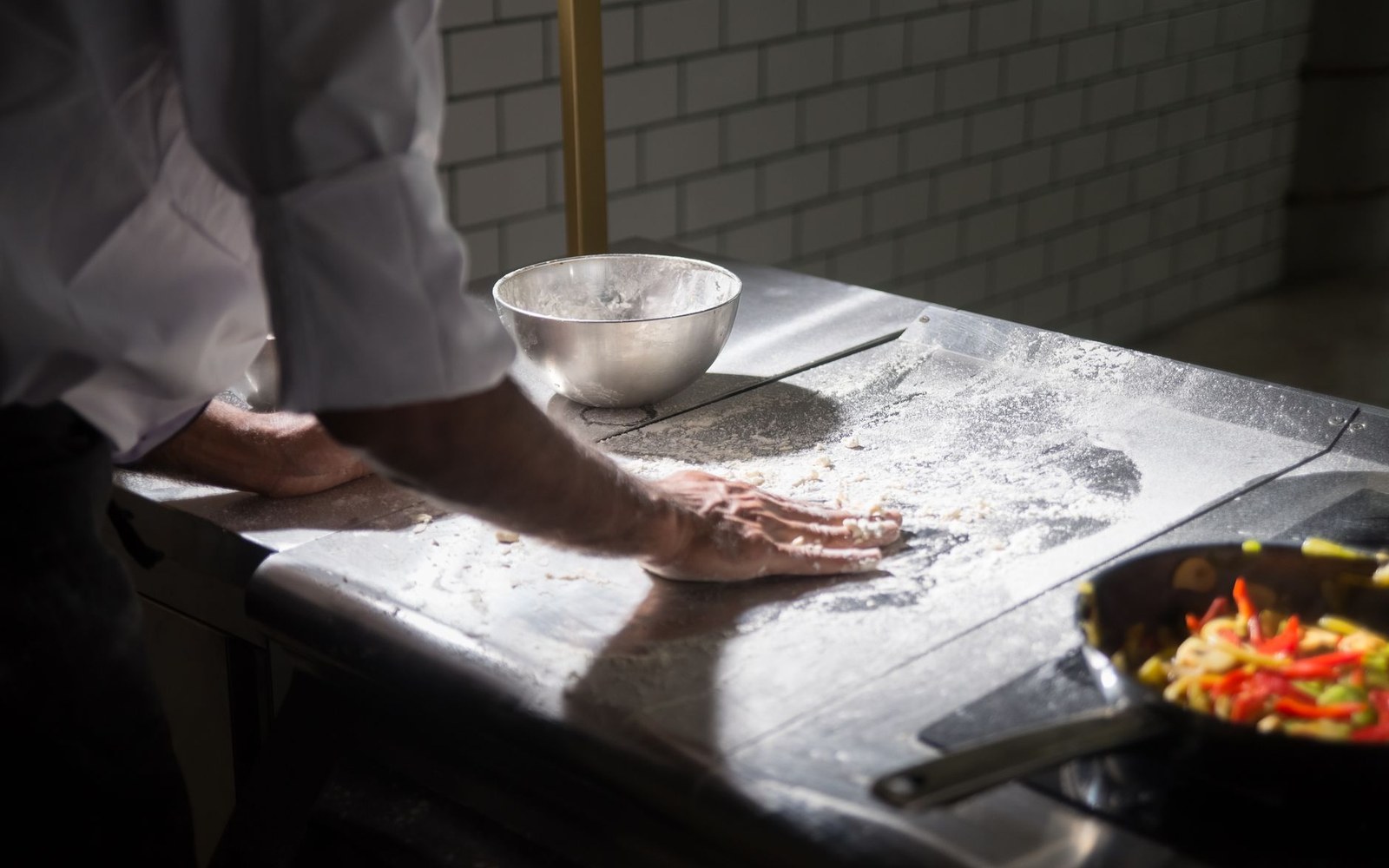
Steel, a scraper and a bench: the equipment list for most of what follows is short, and the variable that matters is a temperature held over hours.
Photo: Kampus Production / PexelsThe next day, bring the shoulder to somewhere close to room temperature — ninety minutes out of the fridge is usually enough for a piece of this size. Pat it dry. The surface must be dry. Wet meat steams in a hot pan rather than browning, and the Maillard reaction responsible for the deep colour — and for the hundreds of flavour compounds generated at the surface — requires a dry, high-heat contact. Use a wide, heavy-based pan, preferably cast iron or carbon steel. Get it properly hot before the fat goes in: a drop of water should evaporate on contact. Add a neutral fat, or rendered lamb fat if you have it, and brown the shoulder in stages — three or four minutes per face, without pressing or moving it. The bone side will not brown evenly; do not obsess over it. What matters is a deep mahogany crust on every flat surface, including the two cut ends.
The Braise: Temperature Is an Argument
Transfer the shoulder to a deep, tight-lidded casserole or hotel pan. In the browning pan, soften two medium onions, four or five garlic cloves, and a couple of celery stalks in the residual fat — eight minutes over moderate heat, long enough to develop sweetness rather than just soften. Add a large spoon of tomato paste and cook it for two minutes until it darkens slightly. Deglaze with 250 ml of dry white wine and scrape the pan clean; reduce the wine by half. Add enough lamb or chicken stock to come two-thirds of the way up the shoulder — roughly 600–800 ml depending on the shape of the vessel. Add a few sprigs of rosemary, a bay leaf, and the browned aromatics. The liquid level matters: too low and the top of the shoulder dries and tightens before the collagen has finished converting; too high and you are making a stew, not a braise, and the rendered fat has nowhere to concentrate.
Cover tightly — use a layer of parchment under the lid if the seal is not confident — and slide it into a 120 °C oven.
Here is what is happening and why the temperature is not negotiable. Collagen conversion — the process by which triple-helix collagen molecules unravel and dissolve into gelatin — begins around 70 °C but proceeds meaningfully only over time. At high temperatures, the muscle fibres contract violently and expel moisture before the collagen has a chance to dissolve and lubricate them. The result is dry, stringy meat. At 120 °C ambient, the core of a 2.2 kg shoulder will stabilise somewhere between 80 °C and 90 °C over the course of the cook — hot enough to drive conversion, low enough not to shred the muscle prematurely. Nine hours is the minimum for a shoulder of this size. There is no meaningful benefit in rushing to 160 °C and finishing in four; you will destroy the gelatin network before it can protect the meat.
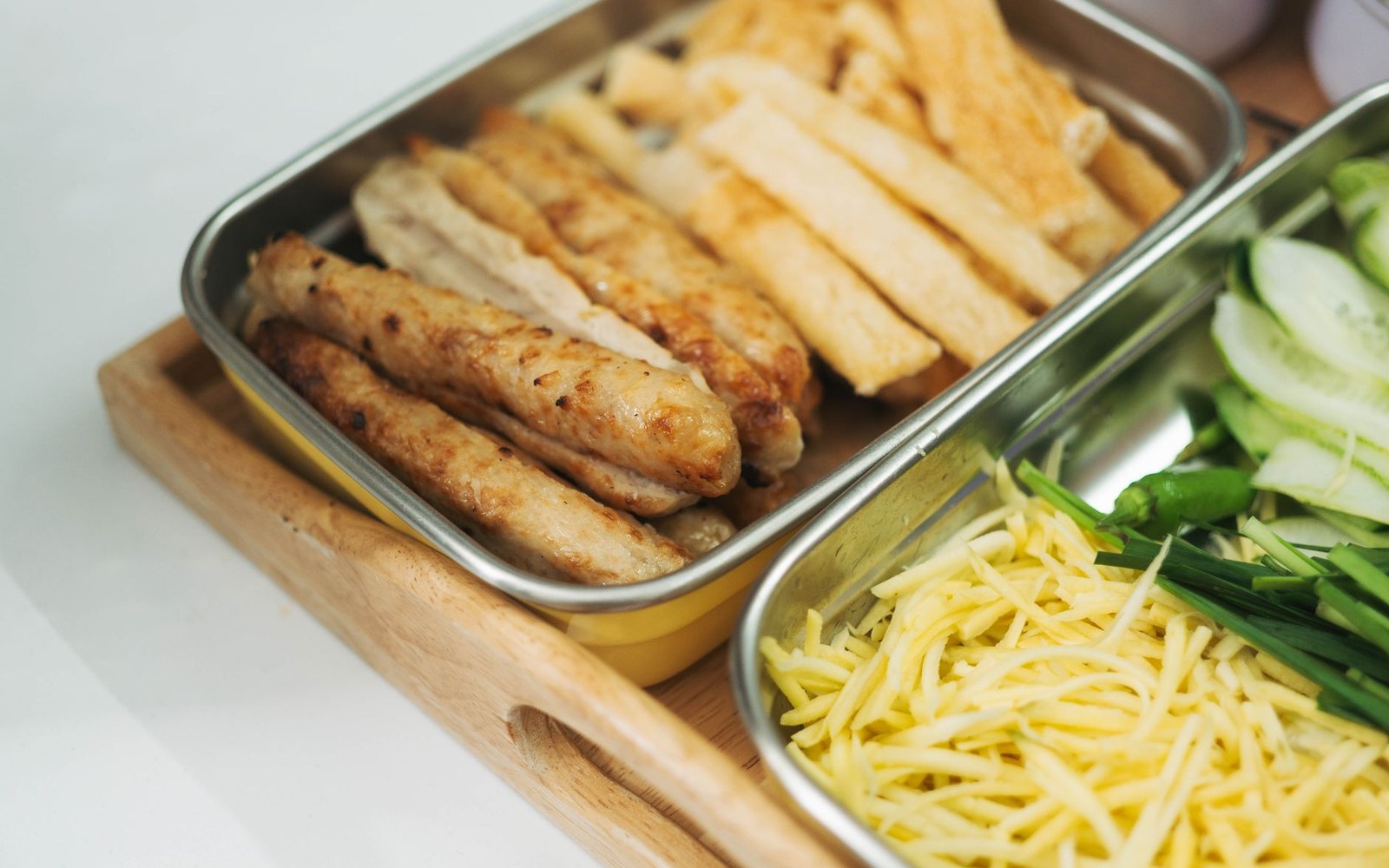
Nothing on a pass is weighed during service. Quantities are settled hours earlier, in containers, which is why a written ratio matters more than a written recipe.
Photo: FOX ^.ᆽ.^= ∫ / Pexels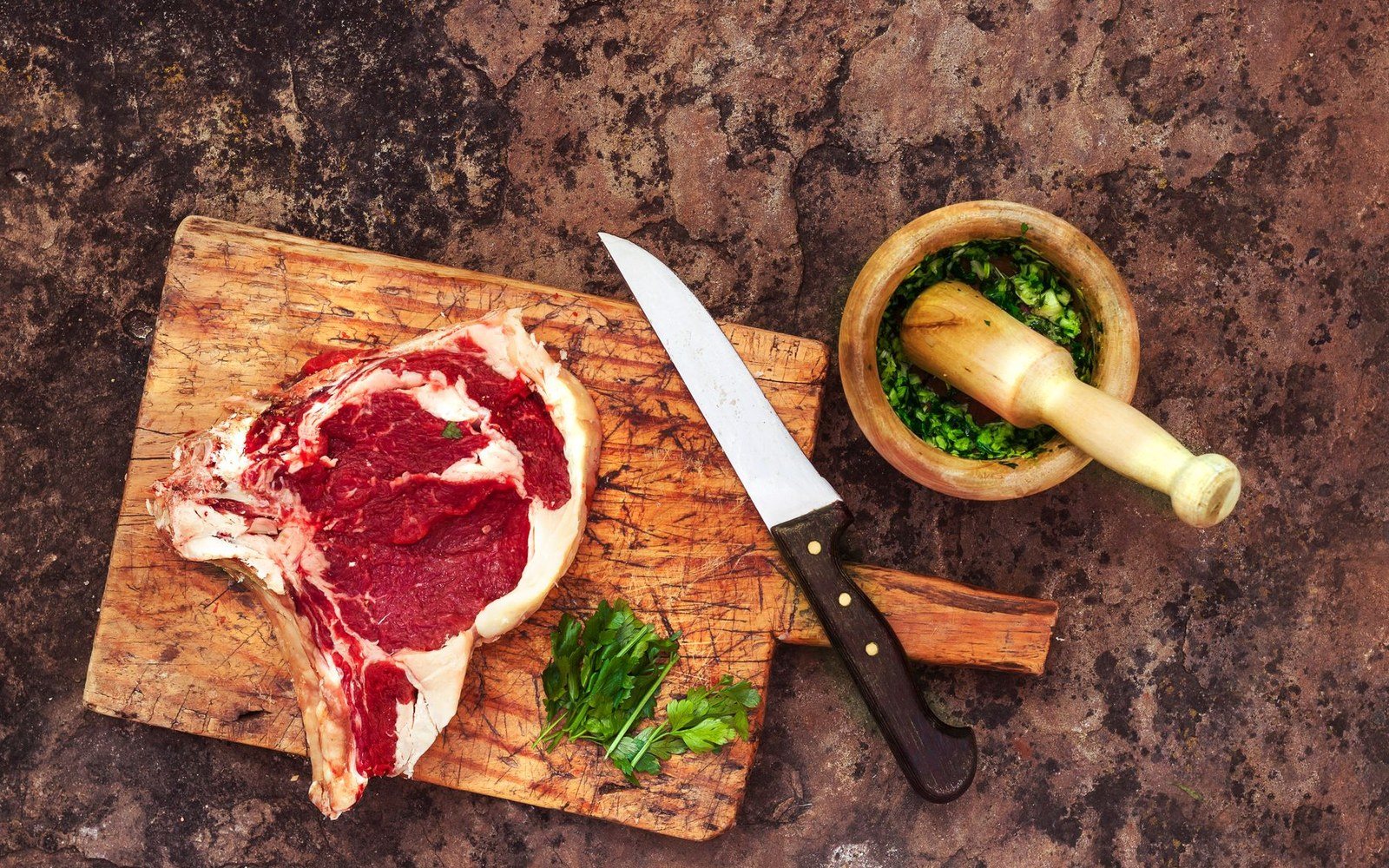
Butchery decides the cut, and the cut decides the method. A bone left in changes both the cooking time and the finished sauce.
Photo: Zakhar Vozhdaienko / PexelsCheck it once at the five-hour mark to confirm the liquid has not reduced below the halfway point. Add a small amount of stock if it has. By hour nine, you will be able to push a thin skewer through the shoulder without resistance, and the collagen-rich connective tissue running through the supraspinatus will have dissolved into the braising liquid, enriching it with a natural gelatin that no cornstarch can replicate.
What to Do with What You Have
Remove the shoulder from the oven and rest it in the braising liquid, lid on, for at least thirty minutes. This is not optional; the internal temperature is still travelling, and the fibres, which have been under sustained heat stress, need time to relax before any tension is applied to them.
Lift the shoulder carefully — it will not hold together as a single piece; the scapula and humerus will separate easily by hand, and the meat should fall from the bone in thick, fibrous chunks rather than mush. Mush means overcooked. The target is meat that holds its structure until pressed, then yields completely.
Strain the braising liquid through a fine sieve and degrease it — either skim by hand if serving immediately, or refrigerate until the fat solidifies and lift it off cleanly. What remains is a naturally gelatinised lamb jus: it will set to a soft gel when cold. Reduce it by roughly a third over direct heat to concentrate and sharpen the flavour. Taste and adjust salt only now, after reduction, because the salt level will intensify with the reduction.
The shoulder can be served in the bone-in pieces as it comes apart, or pressed overnight under weight in a lined terrine mould, portioned cold, and then seared to order — a technique familiar from brigade kitchens where advance preparation is essential and the cook cannot wait for a braise to finish during service. In the latter case, reduce the jus further to a sauce consistency and finish it with a small amount of cold butter off the heat, as a beurre monté would be mounted, to add gloss and round any sharpness.
Food cost on a dish like this is favourable relative to its yield and plate presence. Lamb shoulder in the UK costs a fraction of leg or rack — as of recent wholesale figures, neck and shoulder cuts consistently run well below prime leg prices, yet the finished dish carries the weight and depth of a long cook behind it. The nine hours is the labour cost. The low temperature is the method's argument: not tenderness as comfort, but collagen as structure, dissolved into gelatin, doing the work that a short cook cannot do and an expensive cut does not need to.
Method at a glance
- 01Shoulder weight — 2.2 kg, bone-in
- 02Salt rate — 1.5% of total weight (33 g per 2.2 kg), applied the day before
- 03Browning — dry surface, very hot pan, 3–4 minutes per face; deep mahogany crust required
- 04Liquid level — two-thirds up the shoulder; mix of white wine reduction and lamb or chicken stock
- 05Oven temperature — 120 °C
- 06Cook time — 9 hours minimum; check liquid level at 5 hours
- 07Rest — minimum 30 minutes in the braising liquid, lid on
- 08Jus reduction — strain, degrease, reduce by one-third; season only after reducing