Fergus Henderson Made the Cheap Parts Central
A restaurant built on offal is not a sentiment. It's a cost structure.
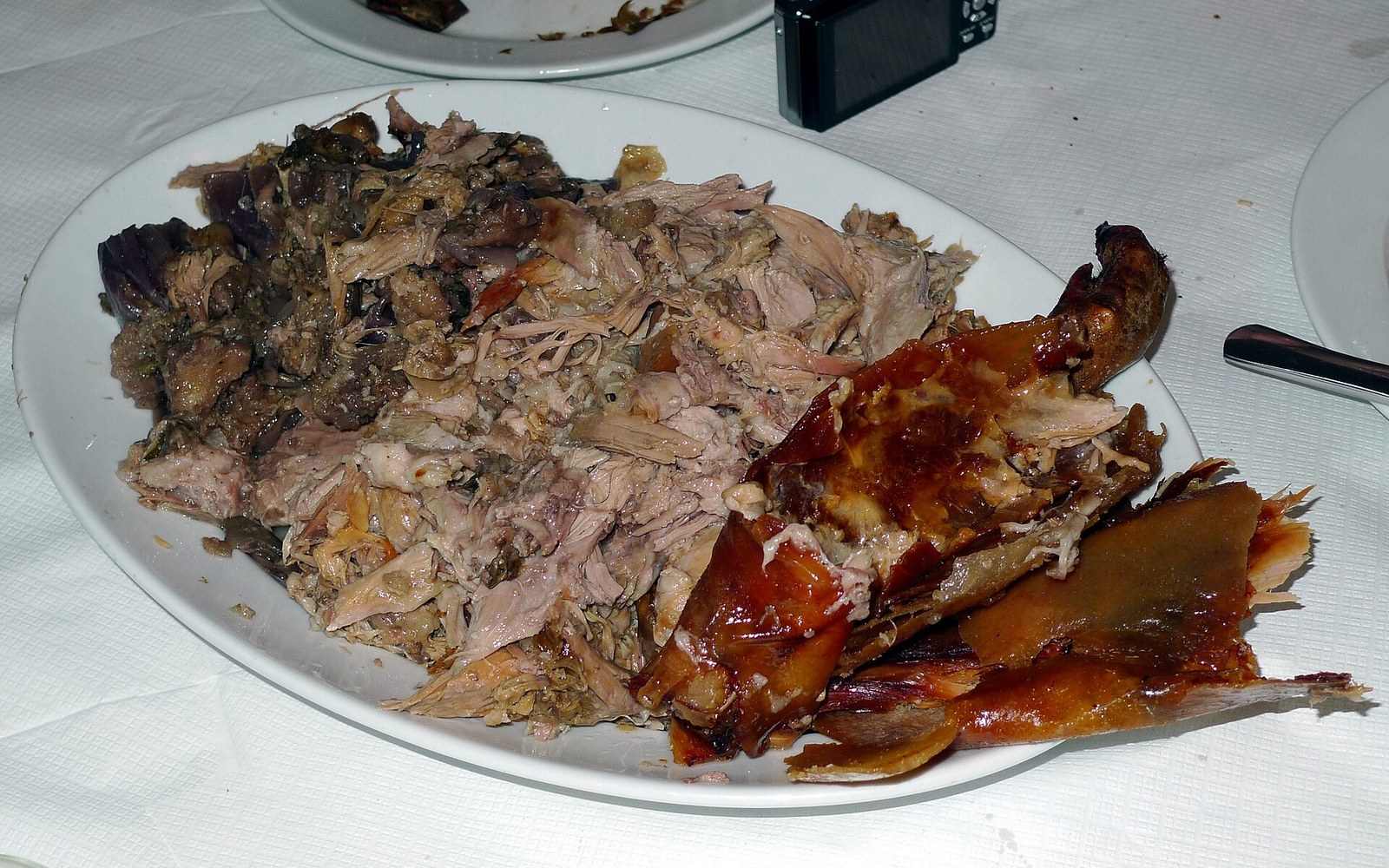
Henderson's nose-to-tail argument as a culinary position: what it meant to put bone marrow, tripe and pig's head at the centre of a menu in 1994, and how St.
Photo: St John Restaurant, Smithfield, London · Wikimedia CommonsThe Logic Behind the Menu
When St. JOHN opened in Smithfield, London in 1994, Fergus Henderson put bone marrow, tripe, pig's trotters and pig's head on a menu in a bare white room and charged accordingly. The gesture read as philosophical — a nose-to-tail manifesto against the era's squeamishness — but the kitchen arithmetic was equally the point. Secondary cuts, offal and bone carry a food cost percentage well below the 28–32 per cent convention of a full-service restaurant. A dish built on marrow bones costs a fraction of one built on fillet. The margin on a well-executed tripe dish is not a compromise; it is a reason the restaurant can exist.
The principle Henderson articulated — that every part of the animal is equally valid kitchen material — is not generosity toward the ingredient. It is discipline. Collagen conversion in slow-cooked trotters, the rendered fat of a pressed pig's head, the silky unctuousness of a properly prepared bone marrow: these outcomes require time and technique, not expensive raw material. The cook's labour is the cost. The cut is cheap because demand is thin and skill requirements deter most kitchens.
A full room is a necessary condition and not a sufficient one. What the seats earn has to clear food cost, wages, rent and service before anything remains.
Photo: Szymon Shields / Pexels
Sourcing sets the ceiling on what a kitchen can cook. Every method here assumes an ingredient that arrived in the state the method expects.
Photo: Kampus Production / PexelsHenderson formalized this in Nose to Tail Eating, first published in 1999, which gave the philosophy a name the industry could use. What the book described, St. JOHN had already been running as a daily practice since its first service: a menu that changes with what is available, structured around the logic that the whole animal is the unit of cooking, not the prime cut.
The economics follow from the cooking, or the cooking follows from the economics — at St. JOHN the two are the same argument. A butcher's market at Smithfield is fifty metres away. The restaurant sources what arrives, uses the whole of it, and prices it for a room that is not trying to feel luxurious. That is a business model. Henderson made it look like a conviction, which is the harder trick.
Key terms in use
- 01nose-to-tail — the practice of cooking every part of the animal; offal, bone, skin and fat treated as primary material, not by-product
- 02food cost percentage — ingredient cost as a share of menu revenue; offal-led menus can run significantly below the 28–32% full-service benchmark
- 03collagen conversion — collagen in connective tissue dissolving into gelatin under sustained low heat; the mechanism behind braised trotters and pressed head