Noma Stopped Serving and Opened as a Test Kitchen
René Redzepi closed one of the most influential restaurants of the century because the numbers don't work — and said so plainly.
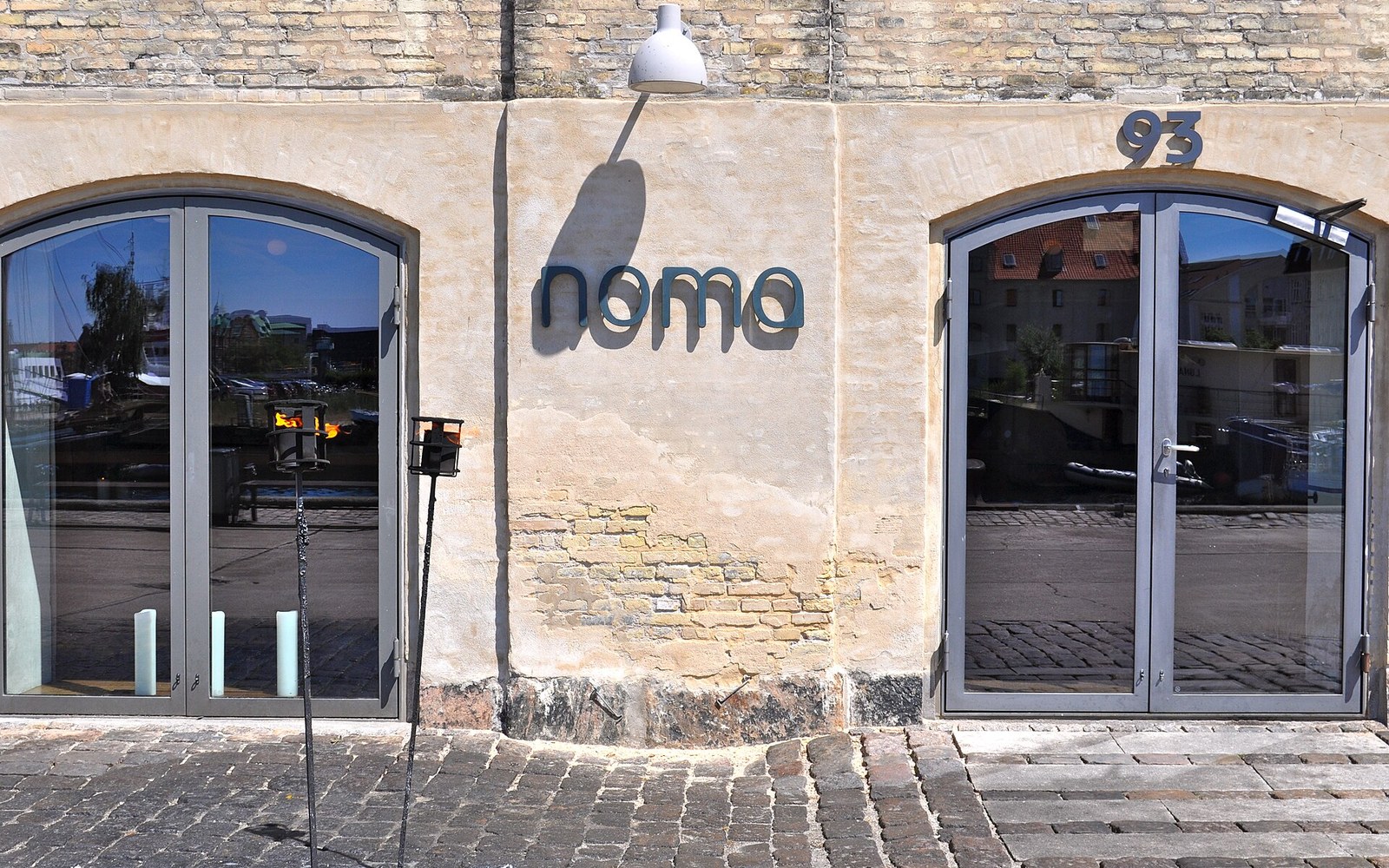
An account of Noma's closure as a nightly restaurant at the end of 2024 and René Redzepi's stated reason — that the hours a tasting menu needs cannot be paid for by the seats it holds.
Photo: Noma Exterior - 4831165333 · Wikimedia CommonsThe Math Behind the Closure
Noma served its last dinner as a nightly restaurant in December 2024. Redzepi announced the decision in January 2023, citing a reason rarely stated so directly by a chef at that level: a tasting menu of the ambition Noma required could not generate enough revenue per seat to pay a full brigade fairly, cover its procurement costs, and still function as a going concern. The restaurant had roughly twenty covers a night. The labour required to cook at that specification — the foraging, the fermentation lab, the multi-month pop-up model, the perpetual reinvention — was not proportionate to what twenty people paying for dinner could sustain, even at Noma's prices.
The numbers are structural, not exceptional. A full-service tasting-menu kitchen routinely targets a food cost percentage of 28–32 percent of revenue. Labour in a kitchen of Noma's complexity runs far above the 30 percent that already strains a conventional room. Stack procurement — the wild ingredients, the relationships with growers, the fermentation inputs — on top of that labour, and the margin compresses toward zero before a single wage increase is absorbed. Noma's situation was not a business failure in the ordinary sense; it was an honest acknowledgment that the model was structurally loss-making at any scale the dining room permitted.
A full room is a necessary condition and not a sufficient one. What the seats earn has to clear food cost, wages, rent and service before anything remains.
Photo: Szymon Shields / PexelsThe broader context matters. By 2023, conversations about kitchen labour in the industry had shifted substantially. The long-hours brigade culture, which Auguste Escoffier codified and which had persisted largely unchanged for over a century, was being openly questioned — not least because retaining cooks at every level was becoming harder and more expensive. Redzepi had written and spoken about unpaid stagières and exploitative hours before; closing rather than continuing on those terms was the logical endpoint of that reckoning.
What the Test Kitchen Actually Does
Noma did not close in the sense of darkening the building. The Copenhagen space operates as Noma Projects — a food production and research organisation whose output is commercial, not editorial. The work already visible before the closure continued: the fermentation programme that had been producing garum, koji-fermented misos and lacto-fermented products for years became the primary operation rather than a support function for service.
Noma Projects sells finished products — vinegars, fermented sauces, preserved ingredients — and takes on research and development collaborations with outside producers and food companies. The model inverts the restaurant equation: instead of thirty covers subsidising the research, the research and its products generate revenue directly. A test kitchen of this kind answers to a production schedule, not a reservation book, which changes the shape of every working day and — in theory — every employment contract.
The fermentation lab at Noma was already one of the most extensively documented kitchens of its kind. Its methods — beef garum, grasshopper garum, black garlic, shio koji — had been published in the 2018 Noma Guide to Fermentation, co-authored by Redzepi and David Zilber, which became a reference text for professional kitchens well beyond Scandinavia. Moving those methods from back-of-house support to the core commercial offering was not a reinvention; it was a reorientation of what had always been there.
Nothing on a pass is weighed during service. Quantities are settled hours earlier, in containers, which is why a written ratio matters more than a written recipe.
Photo: FOX ^.ᆽ.^= ∫ / PexelsWhether the Model Travels
The honest answer is: partially. The Noma Projects model depends on the brand equity accumulated over two decades, five World's 50 Best Restaurant rankings at number one, and a fermentation programme already internationally recognised. A less prominent kitchen cannot replicate that starting position. What other rooms can — and increasingly do — take from the logic is narrower: the acknowledgment that a tasting menu's labour intensity may simply exceed what diners can be charged.
Several European kitchens have moved in adjacent directions without announcing them as closures — shortening service to four or five nights, eliminating lunch, reducing covers deliberately, or restructuring as supper clubs with a fixed annual calendar rather than open reservation systems. None of this is Noma Projects; all of it reflects the same underlying arithmetic. The restaurant that Redzepi built was singular. The problem it named is not.
The structural problem in numbers
- 01Noma's nightly covers at closure: approximately 20
- 02Conventional food cost target: 28–32% of revenue
- 03Labour cost in a tasting-menu kitchen: routinely above 30% before procurement
- 04Combined food and labour at Noma's specification: capable of exceeding 70–80% of revenue, leaving near-zero margin
- 05Noma's final regular service: end of 2024